“Reforming Affordances”
In every creative piece, object, and platform lies its inherent suggestions, uses, and meanings. We are conditioned to adhere to these guidelines, ignoring the possibilities of whimsical, novel, and critical applications. Thus, my work explores nonconformity within these structures to offer the ways in which creativity and innovation lies in the “what if.”

Evidence of Creative Exploration
The following works document my work over the course of the semester.
[RE]orchestrating Instrumentation
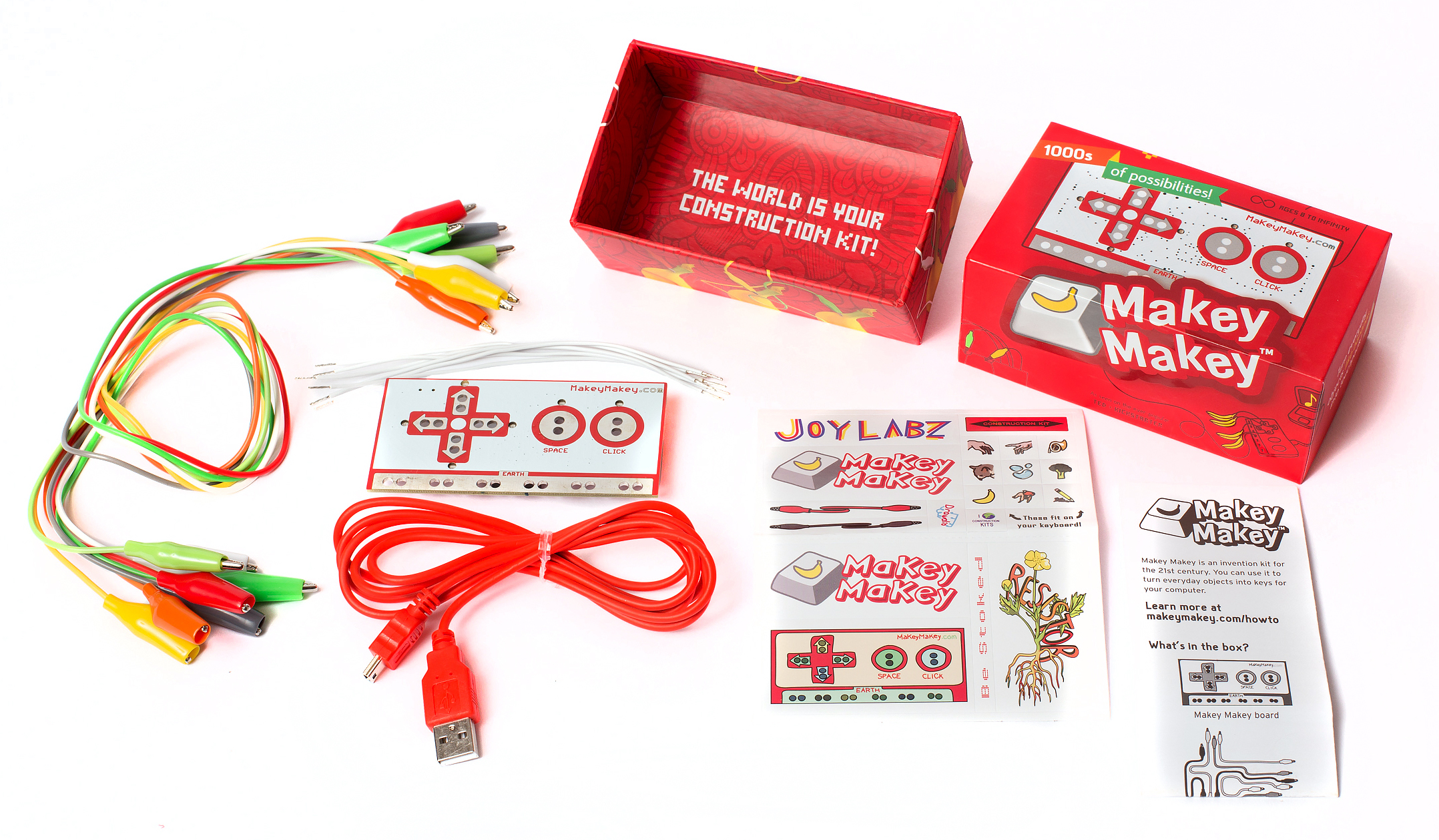
This work challenges the inherent functions and uses of musical instruments. Society is taught that many objects, especially instruments, have a sole function and purpose, and that they should only be used in that specific way. While musicians and their instruments tend to have symbiotic relationships, giving personality and vitality to their sonic productions, there seems to be only one way an instrument can be played. Thus, using special software and hardware (Makey Makey) this work programs a guitar to sound like a piano and a bass to sound like a drum snare. With these new connections and mappings, users can play the piano and drums by playing the guitar and bass, exhibiting a playful and insightful look into what instruments and their native sounds actually mean.
“Thus, by strumming the bass guitar, the user was able to play a piano chord, creating playful juxtapositions. I then proceeded to map a kick sound to my electric guitar.”
[Poké]buse
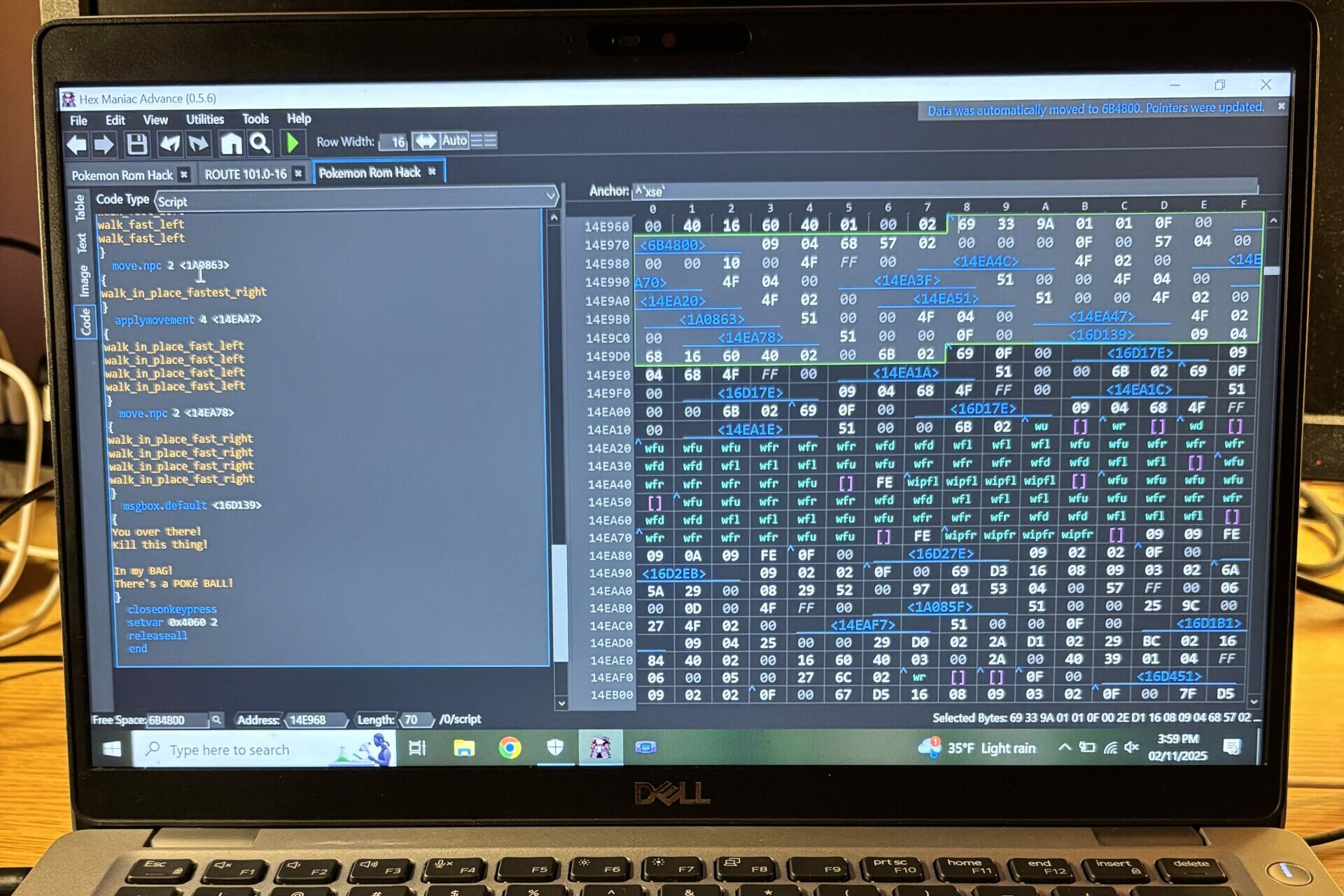
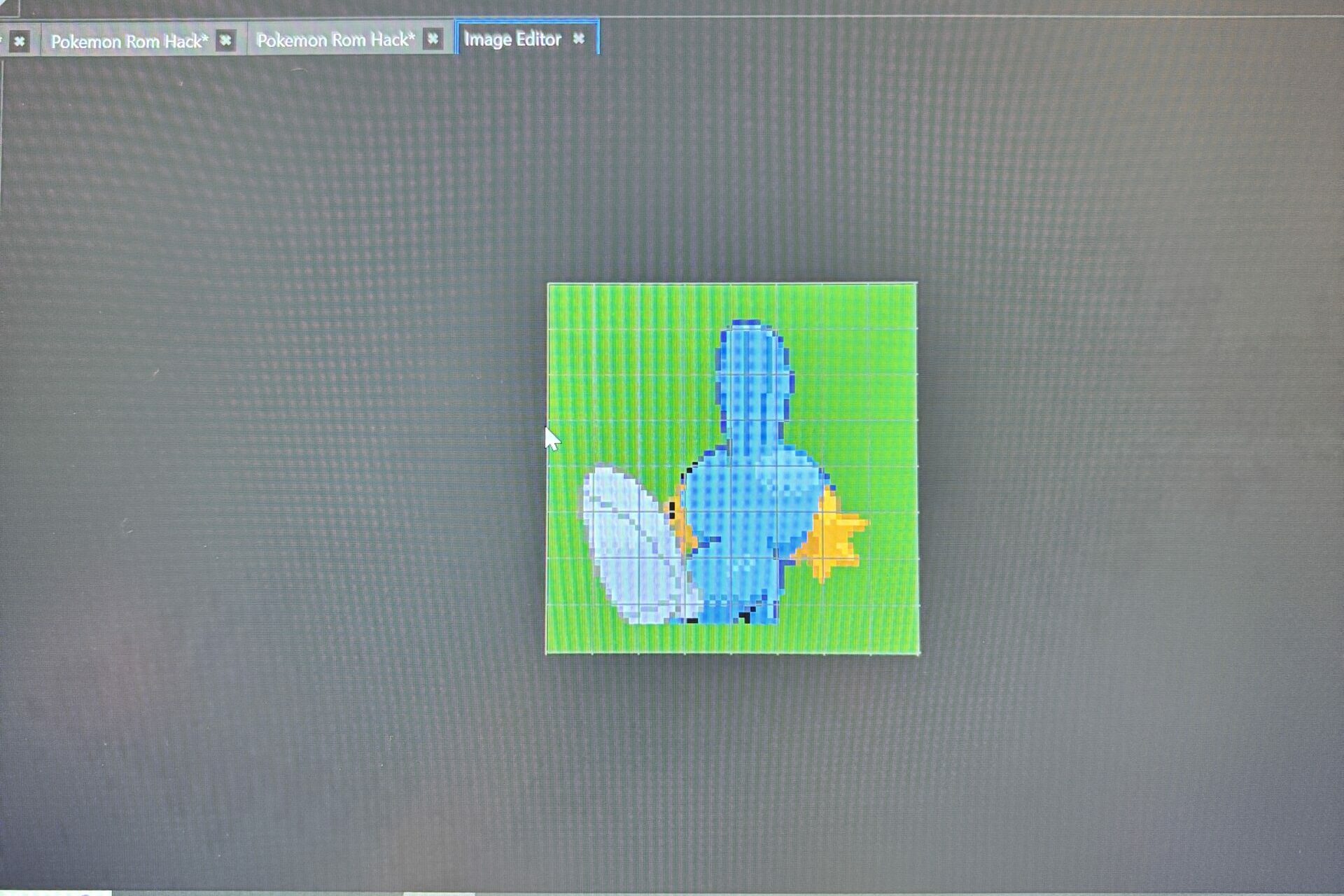
Despite their societal notions of having whimsical, frivolous characteristics, many video games contain, or have the ability to contain, underlying critical implications. When situating video games within the framework of ROM hacking, seemingly insubstantial games can offer impactful critiques on societal issues. Thus, this work uses hex editing software named “Hex Maniac Advance,” to rewrite, redesign, and recontextualize the Gameboy Advance title, Pokémon Ruby Version, unveiling the Pokémon franchise’s glorified representation of animal cruelty and animal fighting.
“Throughout the week, I worked on my Hack by redesigning character sprites, Pokémon sprites, and in game text. To offer a critical stance on the underlying implications of the Pokémon objectives, I redesigned the game to be about animal cruelty.”
[Musical]penmanship
This work explores the relationship between inconvenience and innovation by using Logic Pro, a digital audio workstation, as a word document software. This work primarily thinks about the ways in which the software’s tools suggest ideas through their names and functions. Thus, by using MIDI and piano roll technologies to display letters and words (rather than chords and melodies) and by manually changing the duration and location of different notes, this work challenges social assumptions of what Logic Pro offers.
“I am using Logic Pro, a digital audio workstation, to display text (like typing software). I figured this would be a playful intervention as Logic Pro is solely used for creating audio and music. Within the software, there are spaces known as MIDI regions that display the notes being played. So, instead of notating chords and melodies, I used the MIDI regions to notate letters of the alphabet.”


[W.A.E.] What’s America’s Enemy
This work taps into the inherent quality of music to create a product that pays homage to legendary songs of advocacy throughout different time periods. By using Logic Pro, a digital audio workstation, this work combines and remixes the tracks “What’s Going On” (1971) by Marvin Gaye, “This is America” (2018) by Childish Gambino / Donald Glover, and “Water No Get Enemy” (1975) by Fela Kuti. These three songs all share a common theme of using music as a way of fighting oppression and injustice caused by institutionalized racism, prejudice, and government corruption. It is important to note that despite their different time periods, historical contexts, genres, and styles, music gave these artists a platform to spread awareness and advocate for the oppressed.
“When I started remixing the songs I chose (using Logic Pro and a feature that lets you split the stems of the song, isolate vocals, drums, etc.), I ran into some issues with tempo, key, and bleeding audio. As I began to combine the different songs together, I noticed that there were slight variations in tempo, causing the audio to become unaligned and unlistenable.”

[E.A.W.] Everything’s Already Written
By splicing, reforming, transposing, and transforming musical elements of my previous work, [W.A.E.] What’s America’s Enemy, this work remixes a remix to offer a new, critical message. This old work used three musical pieces from three distinct time periods to exhibit music’s quality and tendency to be used for advocacy against systems of oppression, inequality, and injustice, sharing a common factor of using music to unveil the overwhelming negativity and corrupt undertones of society. As a response, this work recontextualizes these pieces by suggesting that music, in addition to being used as a form of advocacy, can also be used as a coping mechanism to forget and distract from these times of negativity.
“By keeping and splicing certain lyrics of “This is America” and adding new elements from songs like “Funny Thing” (2020) by Thundercat, “Boogie Wonderland” (1979) by Earth, Wind & Fire, “The Bottle” (1974), and “Comment #1” (1970) by Gil Scott-Heron, the meaning of Hack #4 becomes reshaped to exhibit how music offers an outlet during dark times.” (from Artist Statement)

