Despite their societal notions of having whimsical, frivolous characteristics, many video games contain, or have the ability to contain, underlying critical implications. While some video games, like The Last of Us (2013), Detroit Become Human (2018), and Mouthwashing (2024), offer more explicit commentaries on societal concepts, other iconic franchise titles, like New Super Mario Bros (2006), Call of Duty: Black Ops 3 (2015), or NBA 2K16 (2015), appear superficial when thinking about their critical arguments. However, when situating some of these titles within the framework of ROM hacking, “an ‘umbrella term’ referring ‘to the direct manipulation of commercially released video-game program data to alter the original gameplay, graphics and sound or level designs,’ and involves deconstructing the physical game cartridge and circuit board as well as altering the ROM itself” (Kirtz 2-3), seemingly insubstantial games can offer impactful critiques on societal issues.
For instance, the NES video game series, Donkey Kong, initially appears to be a simple game with an objective to rescue a damsel in distress, Pauline, from the giant gorilla, Donkey Kong. Players control the main character, Mario, to jump on platforms, climb ladders, and avoid obstacles. When viewed more closely, however, this game (and franchise as a whole) embodies hegemonic masculinity through its objectives, reinforcing the idea of male consumerism, power, and dominance. In response to this unproductive masculinity, “Mike Mika created a Donkey Kong NES hack [in 2012] that places Pauline in the protagonist role that is usually occupied by Mario” (Kirtz 2). While the ROM hack was initially created for Mike’s daughter, it gathered vast public attention through both news outlets and social media platforms for its critiques on masculinity. The hack represented large video game communities “where there often is ‘a lack of interest or even outright derision regarding games about domesticity and girlhood’” (Kirtz 2). Mika’s gender swapping revealed concentrations on hegemonic video-game culture, assumptions on video-game gender, and the marginalization of feminine and women centric video game players and creators. This hack proves that even the most seemingly “basic” video games like Donkey Kong contain underlying themes of society and power.
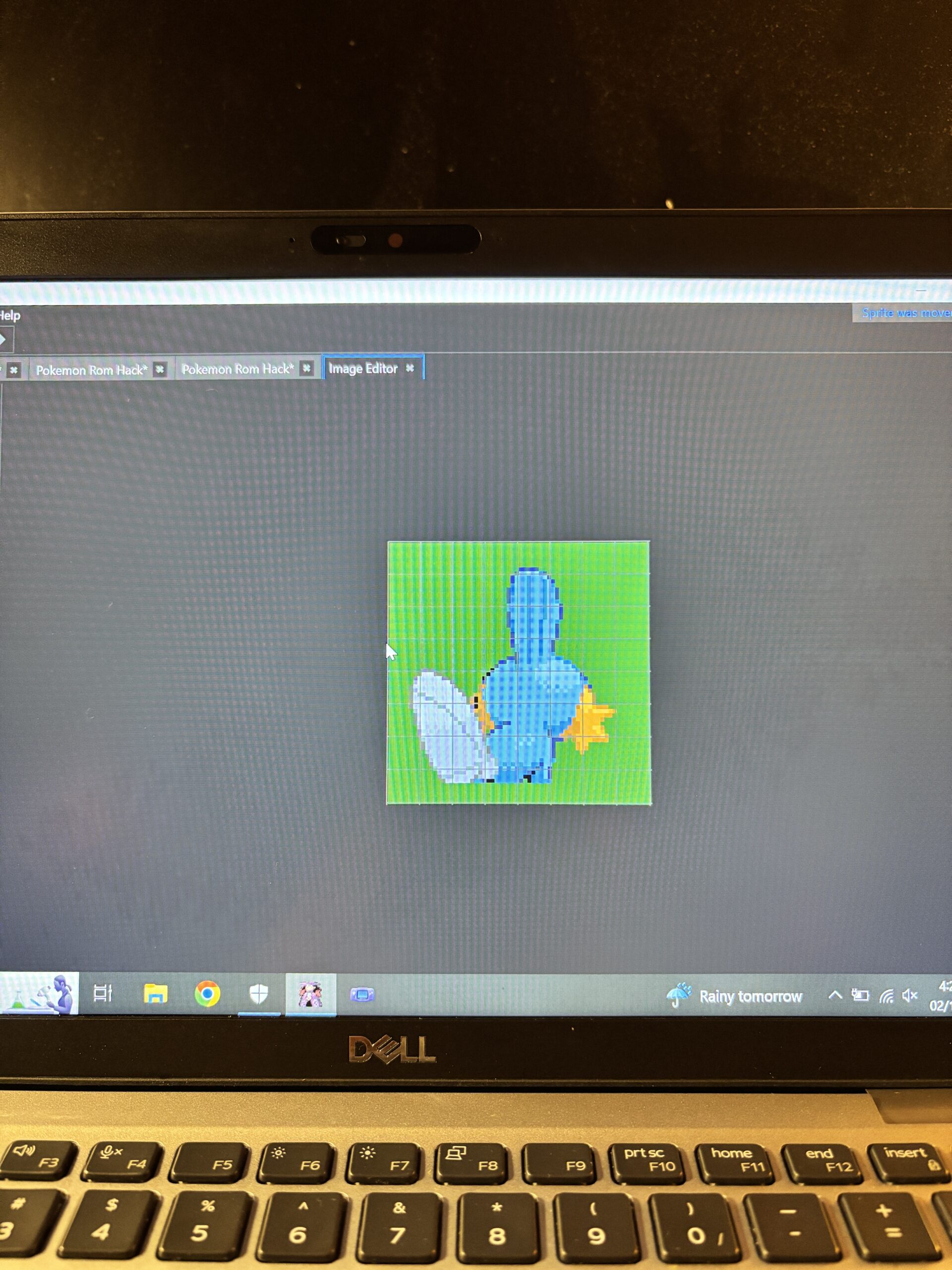
Similar to Mike Mika, I altered at another seemingly “innocent” game for my Hack #2: Pokémon Ruby Version. Pokémon is without a doubt one of the most iconic, worldwide, and influential franchises in entertainment for its thousands of different creatures. With over 200,000 distinct trading cards, 122 different video game titles, and even its own live action movie, Pokémon is widely accepted and enjoyed by millions of fans. Despite these various mediums and large influences, Pokémon remains true to its defining factor of combat. The objective of Pokémon is simple: to train your creatures (Pokémon) to best other, opposing creatures in battle. While the franchise makes this premise out to be lighthearted, playful, and impressive, Pokémon, at its core, is a glorified representation of animal cruelty and animal fighting. Most also tend to gloss over this fact due to the cute, loveable nature of some Pokémon designs. Iconic Pokémon like Eevee, Jigglypuff, and Squirtle (to name a few) are designed to spur wholesome feelings, blinding fans from their inevitable combat with one another. With that being said, I used hex editing software named “Hex Maniac Advance,” to rewrite, redesign, and recontextualize the Gameboy Advance title, Pokémon Ruby Version. Hex editing, which Kirtz explains as programs that “display the software code or data in a hexadecimal notion that can then be directly manipulated by the hacker/user,” allowed me to alter various Pokémon sprites in the game to more explicitly represent the underlying animal cruelty that the franchise exalts (13).
While many ROM hacks often redesign sprites to completely new ones, I, instead, altered the sprites to create a larger argument and impact. To reskin the Pokémon sprites completely, (like to real life animals for instance) would certainly exhibit the nature of animal cruelty and animal fighting within the game. However, the slight alterations and additions to the sprites allow their designs to remain within the “Pokémon Universe,” offering a larger critique on the franchise itself. Essentially, the complete reskin of the Pokémon sprites is nowhere near as impactful as keeping and altering the original sprites. My changes are haunting, forcing players to think more critically about the premise of the game. The adorable starter Pokémon, Treecko, Torchic, and Mudkip, have traces of their loveable designs, only masked by the chain leashes, bloody eyes, and violent gashes that I added. By adding these features, users are able to both recognize the original qualities of the game (and franchise as a whole), all while viewing them from a new, critical lens on animal cruelty. The sprite alterations completely recontextualize the combat aspect of the game, unveiling the truths of what players are actually participating in.
To inform these redesigns, I drew primarily from the critical play concept of “re-dressing” or “reskinning,” coined by Mary Flanagan in her first two chapters of Critical Play: Radical Game Design (2009). She describes that re-dressing or reskinning, a principal type of critical play, occurs when “players make alternative arrangements and disguise their dolls for subversive roles, altering the appearance or the presentation of dolls in a way that allows dolls to enter the forbidden scene. Dolls could merely change costumes, or they could be reskinned with makeup or masks to literally efface the surface of the body” (Flanagan 33). Essentially, doll reskinning creates new opportunities and contexts for critique that were not otherwise accessible and possible. Of course, dolls in this context are rudimentary and situational to childhood play, but can be interchangeable with practically any form of play. Thus, my Hack #2 similarly recontextualizes what the Pokémon franchise exhibits, exalts, and commercializes, unveiling new, deeper implications of animal cruelty.
Informed by:
Mary Flanagan, chapters 1 and 2 from Critical Play: Radical Game Design (2009), pages 1-62
Jaime Lee Kirtz, “Beyond the Blackbox: Repurposing ROM Hacking for Feminist Hacking/Making Practices” from Ada: A Journal of Gender, New Media, and Technology (2018) [Direct Link to PDF]
Documentation:


Leave a Reply